

Blog
NEW: Regulatory Affairs as an advocate of AMR action: from compliance to public health impact
Posted on the 20th November 2026
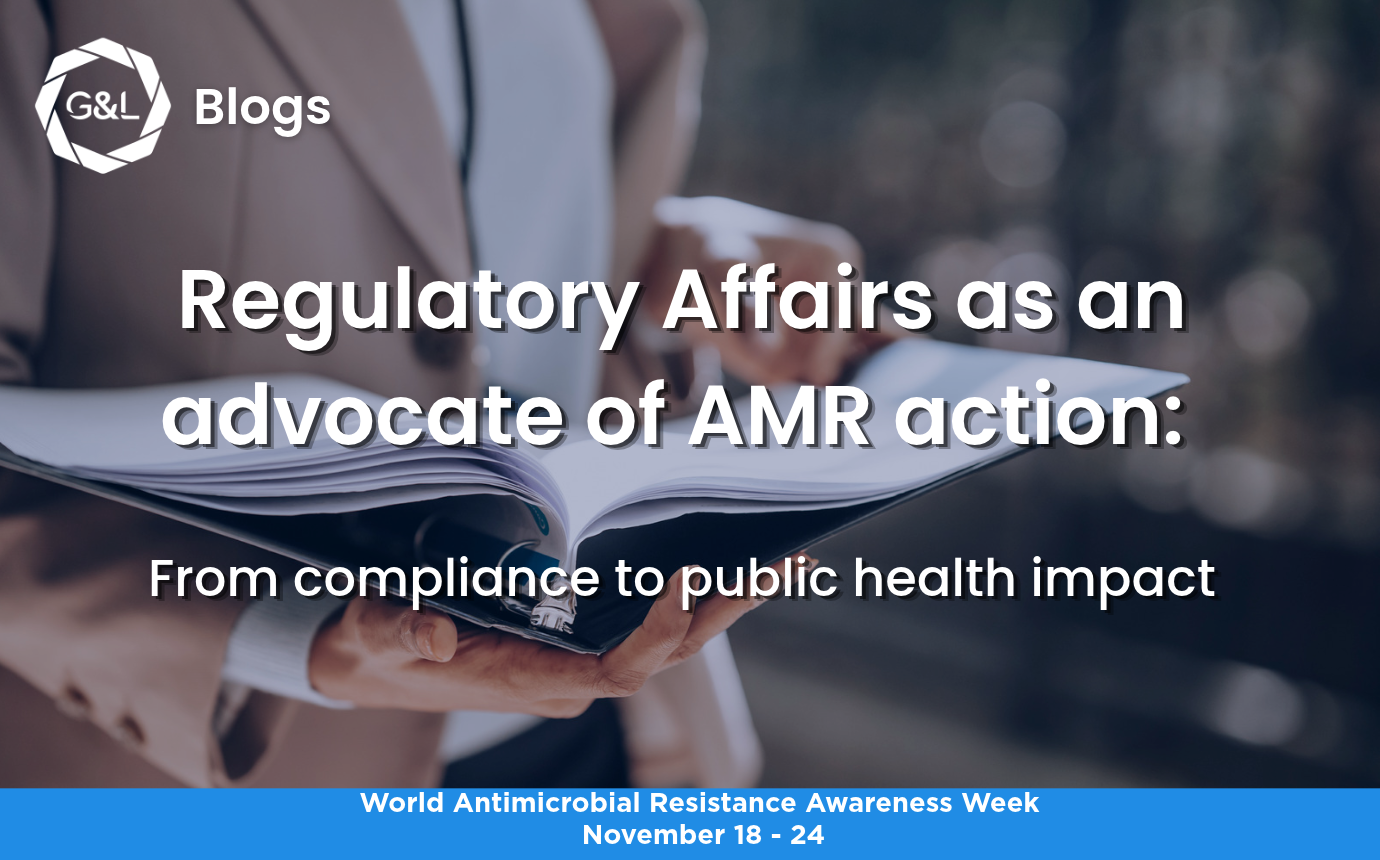

Sarah Hobson, Émer Finnegan, and Ashwati Sarman explore the growing role of regulatory affairs professionals in tackling antimicrobial resistance (AMR).
As the global response to AMR evolves, regulatory affairs has a critical contribution to make beyond traditional compliance and product approval.
From enabling antimicrobial innovation and supporting responsible stewardship to facilitating timely patient access to new medicines, diagnostics and preventative interventions, our experts examine how regulatory expertise can translate scientific progress into meaningful public health impact.
Through the lens of the WHO’s 2026 One Health theme, they highlight why regulatory affairs must be recognised as an important advocate in the fight against AMR.
Antimicrobial resistance (AMR) is one of the most significant public health challenges of our generation. The World Health Organization's (WHO) theme for World AMR Awareness Week 2026,
"One Health, One Action: Prevent AMR Now," highlights the interconnected nature of human, animal and environmental health and calls for coordinated action across all sectors. AMR is no longer a future threat. It is a current global crisis associated with millions of deaths annually and a substantial economic burden worldwide. The updated Global Action Plan on AMR 2026-2036 reinforces the urgent need for collective action to preserve the effectiveness of life-saving antimicrobial therapies.¹˒²
Because AMR transcends national borders, addressing it requires a coordinated One Health response involving governments, healthcare systems, agriculture, industry, academia and communities. The Global Action Plan emphasizes that sustainable progress depends on collaboration, shared accountability and cross-sector partnerships. By embedding these principles across surveillance, stewardship, innovation and financing initiatives, the plan recognizes that meaningful and lasting progress against AMR can only be achieved through collective action.³
The six strategic objectives of the Global Action Plan are to:
- Strengthen awareness and promote behavioral change to reduce AMR risks across all sectors.
- Strengthen surveillance systems and laboratory networks to support evidence-based policies and actions.
- Intensify infection prevention efforts to reduce the burden of infectious diseases and the need for antimicrobials.
- Ensure equitable access to, and appropriate use of, antimicrobials, diagnostics and other health products.
- Accelerate AMR research and innovation.
- Strengthen multisectoral governance, sustainable financing and accountability for a coordinated AMR response.³
Several of these objectives depend directly on effective regulatory systems. While clinicians, microbiologists and public health specialists are often viewed as the frontline of AMR prevention, regulatory affairs provides the framework that enables many of these efforts to succeed. Positioned at the intersection of science, policy and public health, regulatory affairs helps translate innovation into practical healthcare solutions by ensuring that medicines, diagnostics and preventive interventions are developed, authorized, monitored and supplied in a manner that supports both patient access and antimicrobial stewardship.
Regulatory expertise also plays an important role in implementing international standards and national action plans, helping transform evidence-based policies into measurable public health outcomes.
Regulatory affairs can therefore contribute to antimicrobial development, stewardship, innovation, diagnostics and prevention within the One Health framework.
The regulatory challenge of antimicrobial development
Developing new antimicrobials presents unique scientific and commercial challenges. Resistant infections often occur in relatively small and diverse patient populations, making traditional clinical trial designs difficult to execute. At the same time, antimicrobial stewardship programs appropriately encourage the prudent use of new agents to preserve their effectiveness, reducing commercial returns and diminishing incentives for investment.
Against this backdrop, regulators must balance the need for rapid patient access with the requirement to maintain robust standards of quality, safety and efficacy. Regulatory professionals support this process by helping organizations navigate evolving regulatory requirements, engage with health authorities and generate evidence capable of supporting regulatory decision-making. This role is particularly important given that antibiotic development remains economically challenging due to high development costs, short treatment durations and deliberate restrictions on use to preserve effectiveness.⁴
By shaping regulatory strategies early in development, regulatory teams help ensure that innovative therapies are designed, evaluated and submitted in ways that address unmet medical needs while meeting regulatory expectations. However, bringing products to market is only part of the solution. Regulatory oversight also plays a vital role in ensuring that antimicrobial medicines are used responsibly once approved.
Supporting Antimicrobial Stewardship through regulation
Misuse and overuse of antibiotics remain key drivers of AMR. Regulatory frameworks contribute to stewardship by promoting appropriate use, controlling distribution and supporting diagnostic-led prescribing.
Promoting appropriate use through labelling
Regulatory authorities require clear and comprehensive product information describing approved indications, dosing regimens, treatment durations, warnings and storage requirements. Well-designed labelling supports appropriate prescribing and patient adherence, reducing unnecessary or inappropriate antibiotic use.⁵
Supporting Prescription-Only access
Regulatory controls governing the distribution and sale of antibiotics limit non-prescription access, helping reduce self-medication and inappropriate consumption. Such measures remain fundamental components of antimicrobial stewardship programs.⁶˒⁷
Advancing precision prescribing through diagnostics
Regulatory teams also support the development and approval of companion diagnostics and antimicrobial susceptibility testing technologies. By enabling faster and more accurate pathogen identification, these tools facilitate targeted therapy and reduce reliance on broad-spectrum antibiotics, thereby limiting selective pressure for resistance.⁶
Regulatory oversight extends beyond prescribing practices. Poor-quality or counterfeit antibiotics can expose microorganisms to sub-therapeutic concentrations of active ingredients, creating conditions that favor the emergence of resistant strains.⁸ Regulatory professionals therefore support AMR mitigation through oversight of GMP compliance and supply chain integrity,⁹ initiatives to minimize environmental contamination during manufacturing,¹⁰ and shortage-management activities that help maintain access to appropriate therapies and avoid reliance on suboptimal alternatives.¹¹
Accelerating access to innovative therapies
One of the most direct contributions of regulatory affairs to AMR action is facilitating timely patient access to novel antimicrobial therapies. As multidrug-resistant pathogens continue to emerge, health authorities have increasingly recognized the need for more agile regulatory pathways. Accelerated assessments, priority review programs and scientific advice procedures can support more efficient development and evaluation of products addressing serious unmet medical needs.
Regulatory professionals play an important role in coordinating interactions with health authorities, aligning development programmes with evolving guidance and optimising submission strategies. Together, these activities can reduce unnecessary delays between scientific discovery and patient access.
Examples include specialized regulatory designations such as Qualified Infectious Disease Product (QIDP) status and the Limited Population Pathway for Antibacterial and Antifungal Drugs (LPAD).¹² Under the U.S. FDA's GAIN (Generating Antibiotic Incentives Now) provisions, QIDP designation can provide benefits including fast-track eligibility, priority review and an additional five years of market exclusivity for products targeting serious or life-threatening infections.¹³
Similarly, the LPAD pathway allows approval based on streamlined evidence packages for narrowly defined patient populations with significant unmet medical needs. By strategically leveraging these pathways, regulatory teams can help developers overcome obstacles associated with small patient populations, challenging recruitment and limited commercial incentives, while ensuring promising therapies reach patients sooner.¹⁴
Each successful approval of a novel antimicrobial strengthens the treatment options available to clinicians and contributes to broader efforts to combat resistant infections.
Supporting innovation in clinical development
Traditional drug development models are not always well suited to the realities of AMR. Resistant infections may occur infrequently, patients are often geographically dispersed and pathogen-specific recruitment can be difficult. These challenges can make the generation of robust clinical evidence particularly complex.
To address these challenges, regulatory professionals increasingly collaborate with developers and health authorities on innovative approaches to evidence generation, including adaptive trial designs, pathogen-focused development programs, real-world evidence and alternative statistical methodologies.
Recent WHO analyses highlight the fragility of the antibacterial pipeline, noting continuing shortages of truly innovative therapies as well as gaps in pediatric formulations, oral outpatient treatments and solutions for drug-resistant pathogens.¹⁵ Regulatory strategy therefore plays an important role in ensuring that innovative products can be evaluated efficiently while maintaining scientific rigor.
Subscription and incentive models are increasingly being introduced to address market failures associated with antibiotic development. While primarily policy and reimbursement mechanisms, they have important implications for regulatory strategy. Regulatory professionals help align evidence-generation plans, submissions and post-authorisation commitments with the requirements of programs designed to reward antimicrobial innovation.
The UK's Antimicrobial Products Subscription Model is a notable example. Under this approach, companies receive a fixed annual payment regardless of prescribing volume. In August 2024, the NHS tendered 16-year contracts for qualifying antimicrobial medicines, with contracts commencing on 1 April 2026.¹⁶ The model fulfils a commitment within the UK Five-Year AMR Action Plan (2024-2029) to implement subscription-based purchasing mechanisms for antimicrobials.⁸ To qualify, products must target infections caused by pathogens listed on the WHO priority pathogens list.¹⁷
Similar initiatives are emerging elsewhere:
- USA - PASTEUR Act: proposes a subscription-based approach to support critically needed antimicrobials while strengthening stewardship and surveillance efforts.¹⁸
- Sweden - Reimbursement Model: guarantees minimum annual revenue for selected antibiotics in exchange for maintaining supply and availability. Evaluations suggest improved access and earlier introduction of important therapies.¹⁹
- European Union - Push and Pull Incentives: combines research funding with market-entry rewards and revenue guarantees to stimulate antimicrobial innovation and ensure reliable access.²⁰
These approaches recognise that effective antimicrobial innovation requires both scientific and economic sustainability. By supporting constructive engagement between industry and regulators, regulatory affairs helps ensure innovative therapies can be developed efficiently while maintaining confidence in regulatory decision-making.
Enabling the adoption of rapid diagnostics
The fight against AMR extends beyond developing new medicines. Ensuring the optimal use of existing therapies is equally important. Rapid diagnostic technologies allow clinicians to identify pathogens more quickly, reduce unnecessary antimicrobial prescribing and support targeted treatment decisions. Improved diagnostics therefore play a central role in antimicrobial stewardship.²¹
Regulatory professionals support this field by helping developers navigate complex requirements for diagnostic devices and companion technologies. Their responsibilities include coordinating regulatory interactions, supporting evidence generation and facilitating market access while ensuring products meet standards for safety, performance and quality. Initiatives such as the European Union In Vitro Diagnostic Medical Device Regulation (IVDR) illustrate the growing importance of robust regulatory pathways for innovative diagnostic technologies.²²
In many respects, the future success of antimicrobial stewardship may depend as much on advances in diagnostics as it does on advances in therapeutics. Regulatory pathways that support innovation in both areas are therefore essential.
Prevention as a regulatory priority
The One Health approach places prevention at the center of AMR action. Vaccination, infection prevention and control measures, sanitation improvements and environmental protections all reduce the need for antimicrobial use and help slow the emergence of resistance. The revised Global Action Plan on AMR 2026-2036 reinforces this commitment.²³
Regulatory affairs supports prevention by enabling the development, evaluation and approval of vaccines, monoclonal antibodies, bacteriophage therapies, rapid diagnostics and other preventive technologies.²⁴ Regulatory frameworks help ensure that these innovations reach the populations most likely to benefit from them.
The contribution of regulatory affairs therefore extends far beyond treatment. By supporting preventive interventions throughout the product lifecycle, regulatory professionals help reduce infections before antimicrobial therapy is required, preserve antimicrobial effectiveness and advance broader public health goals.
One Health and the expanding regulatory landscape
The One Health concept recognises the close interrelationship between human, animal and environmental health. The emergence and spread of AMR can be influenced by antimicrobial use in healthcare and agriculture, environmental contamination and the global movement of people, animals and goods.²⁵
As adoption of One Health principles expands, regulatory expectations are evolving accordingly. Environmental risk assessments, antimicrobial stewardship commitments and lifecycle management plans are becoming increasingly important considerations for antimicrobial products. At the same time, regulatory frameworks administered by authorities such as the European Medicines Agency (EMA), the UK Veterinary Medicines Directorate (VMD) and the U.S. FDA increasingly extend beyond human medicines to encompass veterinary medicines, food production and environmental protection measures.²⁶˒²⁷
In this increasingly interconnected environment, regulatory professionals are uniquely positioned to help organisations navigate cross-sector requirements, integrate environmental considerations into development programmes and maintain compliance with evolving One Health expectations. Their expertise supports the development of innovative therapeutics, vaccines and diagnostics while contributing to wider public health objectives.²⁸
From regulatory compliance to public health leadership
Historically, regulatory affairs has often been associated primarily with compliance and product approval. The AMR challenge, however, demonstrates that its contribution extends much further.
Every successful scientific advice interaction, every well-designed development programme and every high-quality submission contributes to improving patient access to innovations that can help prevent, diagnose or treat resistant infections.
Regulatory affairs occupies a unique position at the interface of science, policy and public health. By enabling innovation, supporting stewardship, facilitating patient access and advancing One Health objectives, regulatory professionals contribute far beyond product approval. As AMR continues to threaten modern medicine, Regulatory Affairs has an increasingly important role in ensuring that effective antimicrobial therapies, diagnostics and preventive interventions remain available for future generations.
References
- World Health Organization (WHO) (2026) World AMR Awareness Week 2026: One Health, One Action: Prevent AMR Now. Available at: https://www.who.int/news-room/... (Accessed: 4 November 2026).
- World Organisation for Animal Health (WOAH) (2026) World AMR Awareness Week 2026. Available at: https://www.woah.org/en/event/... (Accessed: 4 November 2026).
- World Health Organization (2026) Draft updated global action plan on antimicrobial resistance 2026–2036. Geneva: WHO. Available at: https://apps.who.int/gb/ebwha/... (Accessed: 4 November 2026).
- Gargate, N., Laws, M. and Rahman, K.M. (2025) ‘Current economic and regulatory challenges in developing antibiotics for gram-negative bacteria’, npj Antimicrobials and Resistance, 3(1). Available at: https://doi.org/10.1038/s44259....
- World Health Organization (2026) Global regulatory authorities reaffirm labelling as a high-impact tool to combat antimicrobial resistance. 30 January. Available at: https://www.who.int/news/item/... (Accessed: 4 November 2026).
- European Medicines Agency (2022) Best practices to fight antimicrobial resistance. 21 November. Available at: https://www.ema.europa.eu/en/n... (Accessed: 4 November 2026).
- Swami, O.C. (2014) ‘Strategies to combat antimicrobial resistance’, Journal of Clinical and Diagnostic Research, 8(7). Available at: https://www.ncbi.nlm.nih.gov/p... (Accessed: 4 November 2026).
- Department of Health and Social Care (2024) Confronting antimicrobial resistance 2024 to 2029. 8 May. Available at: https://www.gov.uk/government/... (Accessed: 4 November 2026).
- Nwokike, J., Clark, A. and Nguyen, P.P. (2018) ‘Medicines quality assurance to fight antimicrobial resistance’, Bulletin of the World Health Organization, 96(2), pp. 135-137.
- Access to Medicine Foundation (2022) Methods matter: What steps are companies taking to help curb AMR by manufacturing responsibly? 22 August. Available at: https://accesstomedicinefounda... (Accessed: 4 November 2026).
- World Health Organization. (2024, November 27). Policy and regulatory interventions to address antibiotic shortages in low and middle-income countries. World Health Organization. https://iris.who.int/server/api/core/bitstreams/887aa213-a718-4136-b5ae-bf183e163ac0/content
- One Health Trust (2022) Drug regulatory approvals and opportunities for antimicrobial innovation: Perspectives from Brazil, India and South Africa. Available at: https://onehealthtrust.org/wp-... (Accessed: 4 November 2026).
- U.S. Food and Drug Administration (2021) Qualified Infectious Disease Product Designation: Questions and Answers Guidance for Industry. Available at: https://www.fda.gov/media/1484... (Accessed: 4 November 2026).
- U.S. Food and Drug Administration, Center for Drug Evaluation and Research (2020) Limited population pathway for antibacterial and antifungal drugs (LPAD pathway). Available at: https://www.fda.gov/drugs/deve... (Accessed: 4 November 2026).
- World Health Organization (2025) WHO releases new reports on new tests and treatments in development for bacterial infections. 2 October. Available at: https://www.who.int/news/item/... (Accessed: 4 November 2026).
- Duddy, C. (2024) ‘Netflix’ for antimicrobials: The antimicrobial products subscription model. House of Commons Library, 18 September. Available at: https://commonslibrary.parliam... (Accessed: 4 November 2026).
- World Health Organization (2017) Prioritization of pathogens to guide discovery, research and development of new antibiotics for drug-resistant bacterial infections, including tuberculosis. Geneva: WHO. Available at: https://www.who.int/publicatio... (Accessed: 4 November 2026).
- United States Congress (2023) S.1355 - PASTEUR Act of 2023. Available at: https://www.congress.gov/bill/... (Accessed: 4 November 2026).
- Public Health Agency of Sweden (2024) Availability of antibiotics. 14 August. Available at: https://www.folkhalsomyndighet... (Accessed: 4 November 2026).
- European Union (2023) Council Recommendation on stepping up EU actions to combat antimicrobial resistance in a One Health approach. Available at: https://eur-lex.europa.eu/lega...(01) (Accessed: 4 November 2026).
- Sarman, A. (2024) Latest innovations in AMR diagnosis and mitigation. G&L Scientific, 21 November. Available at: https://gandlscientific.com/kn... (Accessed: 4 November 2026).
- European Commission (2026) Medical devices: New regulations. Available at: https://health.ec.europa.eu/me... (Accessed: 4 November 2026).
- World Health Organization (2026) Draft updated global action plan on antimicrobial resistance 2026–2036. 13 May. Available at: https://apps.who.int/gb/ebwha/... (Accessed: 4 November 2026).
- World Health Organization (2026) Antimicrobial resistance. Available at: https://www.who.int/teams/surv... (Accessed: 11 April 2026).
- World Organisation for Animal Health (WOAH) (2026) World AMR Awareness Week 2026. Available at: https://www.woah.org/en/event/... (Accessed: 12 November 2026).
- European Medicines Agency (2026) Antimicrobial resistance. Available at: https://www.ema.europa.eu/en/h... (Accessed: 12 November 2026).
- U.S. Food and Drug Administration (2026) Antimicrobial resistance. Available at: https://www.fda.gov/animal-vet... (Accessed: 12 November 2026).
- World Health Organization (2026) Antimicrobial resistance. Available at: https://www.who.int/news-room/... (Accessed: 4 November 2026).