

Article
PREVIEW: World Antimicrobial Resistance Awareness Week
Posted on the 18th November 2026
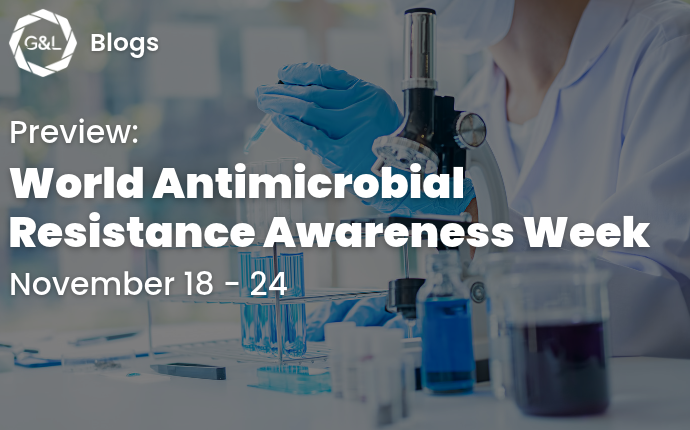

Each year from 18 to 24 November, World Antimicrobial Resistance Awareness Week (WAAW) brings together healthcare professionals, policymakers, researchers, industry, and the public to increase awareness of antimicrobial resistance (AMR) and the actions needed to address it.
AMR occurs when bacteria, viruses, fungi, and parasites no longer respond to medicines designed to treat them, making infections increasingly difficult, and sometimes impossible, to cure. The consequences extend far beyond individual patients, threatening modern healthcare, economic stability, and sustainable development.¹˒²
For 2026, the World Health Organization and its global partners have adopted the theme:
"One Health, One Action: Prevent AMR Now"
The theme reflects a growing recognition that AMR can no longer be viewed solely as a healthcare issue.
The emergence and spread of resistant pathogens are influenced by the interconnected health of people, animals, plants, and the environment. Antimicrobial use in human medicine, veterinary medicine, and agriculture, alongside environmental contamination from antimicrobial residues, all contribute to the challenge. Addressing AMR requires a coordinated One Health approach and collective action across sectors.²˒³
AMR is currently associated with more than 4.7 million global deaths annually, and without effective intervention could result in tens of millions more deaths in the coming decades while placing substantial strain on healthcare systems and economies worldwide. Recognizing this threat, the WHO's Global Action Plan on AMR 2026-2036 calls for increased efforts to prevent infections, preserve the effectiveness of existing antimicrobials and support innovation across healthcare systems.²˒³
While clinicians, microbiologists and infection specialists are often viewed as the frontline of the AMR response, regulatory affairs and market access professionals also have a vital role to play. The ability to prevent AMR depends not only on scientific discovery, but on ensuring that innovative medicines, diagnostics, and preventative interventions can successfully navigate development, approval, reimbursement, and implementation pathways.
For professionals working in these disciplines, the WAAW 2026 theme provides an opportunity to reflect on how their expertise directly contributes to public health outcomes. Regulatory strategies can accelerate access to much-needed innovations, while market access frameworks can help ensure that novel antimicrobials are both available to patients and commercially sustainable within a stewardship-focused environment.
To explore these topics further, this year's G&L Scientific WAAW series will feature two articles to extrapolate on the overarching WHO 2026 theme:
One Health, One Action: How Regulatory and Market Access Professionals Can Help Prevent AMR Now
Article One: Regulatory Affairs as an advocate of AMR Action: From Compliance to Public Health Impact (November 20)
This article examines how regulatory affairs professionals contribute to AMR prevention by supporting the development and approval of novel antimicrobials, diagnostics, and vaccines. It explores the increasingly strategic role of regulatory professionals in translating scientific innovation into patient access and highlight how regulatory decision-making can help address one of the world's most pressing public health challenges.
Article Two: Can we sustain innovation without sustainable reimbursement? Market Access for Novel Antimicrobials (November 24)
This article focuses on the growing importance of market access in the AMR landscape. It will discuss the unique challenges associated with antimicrobial reimbursement, the concept of antibiotic market failure, and emerging approaches such as subscription-based and delinked payment models. It also considers how market access professionals can help create systems that reward innovation while supporting responsible antimicrobial stewardship.
As we mark World AMR Awareness Week 2026, it is evident now more than ever that preventing AMR requires more than awareness alone; every action matters, and every part of the healthcare system has a role to play.
Whether through enabling innovation, facilitating patient access, or shaping sustainable reimbursement models, regulatory affairs and market access professionals are uniquely positioned to contribute to the One Health response.
References
¹ World Health Organization (WHO) (2026) World AMR Awareness Week. Available at: https://www.who.int/campaigns/world-amr-awareness-week (Accessed: 4 November 2026).
² World Health Organization (WHO) (2026) World AMR Awareness Week 2026: One Health, One Action: Prevent AMR Now. Available at: https://www.who.int/news-room/events/detail/2026/11/18/default-calendar/world-amr-awareness-week-2026 (Accessed: 4 November 2026).